
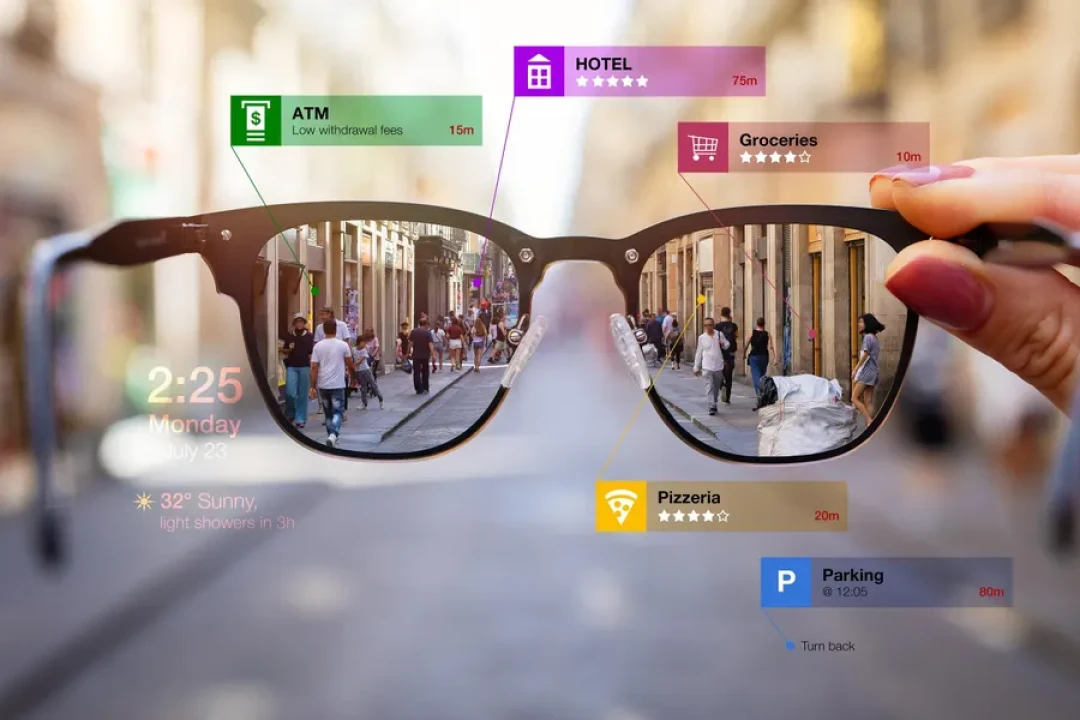
AI Smart Glasses: Smart Vision for a Smarter World
09 Jan 2026
Abstract
AI smart glasses represent a major shift in wearable computing, bringing artificial intelligence directly into everyday vision. By integrating computer vision, voice interaction, and contextual awareness into lightweight eyewear, these devices move beyond traditional screens and touch-based interfaces. This article examines how AI smart glasses work, their real-world applications, current challenges, and their potential to reshape human–computer interaction.
Introduction
The evolution of personal technology has steadily moved toward greater convenience and immersion. From desktop computers to smartphones, each transition has reduced friction between humans and digital systems. AI smart glasses represent the next step in this progression. Unlike conventional smart devices that demand constant attention, AI smart glasses operate in the background, delivering information and assistance within the user’s natural field of view. This shift enables a more seamless blend between the physical and digital worlds, where technology supports daily activities without interrupting them. Technology Behind AI Smart Glasses At the core of AI smart glasses is the integration of advanced sensors, cameras, microphones, and artificial intelligence software. Computer vision algorithms allow the device to interpret visual input in real time, identifying objects, reading text, and understanding environments. Simultaneously, speech recognition and natural language processing enable voice-based interaction, allowing users to communicate with the device conversationally. Many modern AI smart glasses use a hybrid processing model in which basic tasks are handled on the device while more complex computations are performed in the cloud. This approach balances performance with battery efficiency and privacy, ensuring that responses remain fast while power consumption is minimized. Real-World Applications AI smart glasses are finding applications across a wide range of domains. In everyday life, they assist users with navigation, communication, and instant access to information without requiring a smartphone. For travelers and global professionals, real-time language translation allows smoother communication across linguistic barriers, improving both efficiency and confidence. In content creation and documentation, AI smart glasses offer a unique first-person perspective. Journalists, vloggers, and field professionals can capture photos and videos hands-free, preserving authenticity while remaining fully engaged in their activities. In professional environments such as manufacturing, healthcare, and logistics, smart glasses provide real-time guidance, visual instructions, and remote assistance, helping reduce errors and improve productivity. One of the most socially impactful uses of AI smart glasses lies in accessibility. Research in assistive technology has shown that AI-powered eyewear can significantly enhance independence for visually impaired individuals by describing surroundings, reading printed text aloud, and detecting obstacles in real time. Benefits of AI Smart Glasses The primary advantage of AI smart glasses is their ability to deliver intelligence without distraction. By keeping the user’s hands free and eyes up, these devices reduce cognitive load and allow information to be consumed naturally. They also reduce dependence on smartphones, which often fragment attention and interrupt workflows. Over time, this form of ambient computing may lead to more focused, efficient, and safer interactions with technology. Challenges and Ethical Considerations Despite their promise, AI smart glasses face important challenges. Battery life remains a key technical limitation due to the continuous use of sensors and processing power. Privacy concerns are also significant, as always-on cameras raise questions about consent and data security in public spaces. Social acceptance is another hurdle, as users and bystanders adjust to the presence of intelligent eyewear in everyday environments. Ongoing research aims to address these issues through improved power-efficient chips, on-device AI processing, and stronger privacy safeguards. As regulations and social norms evolve, responsible design will be critical to widespread adoption. Future Outlook The future of AI smart glasses is closely tied to advancements in artificial intelligence and miniaturized hardware. As AI models become more efficient and capable, smart glasses are expected to become lighter, more powerful, and more autonomous. Future versions may incorporate health monitoring, advanced augmented reality overlays, and deeper integration with personal AI assistants. In the long term, AI smart glasses could become a primary interface for digital interaction, complementing or even replacing certain smartphone functions. Conclusion AI smart glasses mark a significant step toward a more natural and human-centered computing paradigm. By embedding artificial intelligence directly into eyewear, they transform technology from something we actively check into something that quietly supports us throughout the day. While challenges related to privacy, battery life, and social acceptance remain, the trajectory of innovation suggests that AI smart glasses will play a central role in the future of wearable technology and everyday intelligence.