
Air Compression Recovery Boots: Evidence-Backed Benefits for Muscle Recovery and Circulation
09 Jan 2026
In the world of fitness, sports performance, and everyday wellness, recovery matters just as much as training. Athletes and active individuals often push their bodies hard, leading to muscle fatigue, soreness, and fluid buildup in the lower limbs. Air Compression Recovery Boots—also known as intermittent pneumatic compression (IPC) devices—have gained traction as a recovery tool promising improved circulation and reduced post-exercise discomfort. But what does the science actually say?
Below, we explore how air compression recovery boots work, what research shows about their effectiveness, and how they can fit into a smart recovery routine.
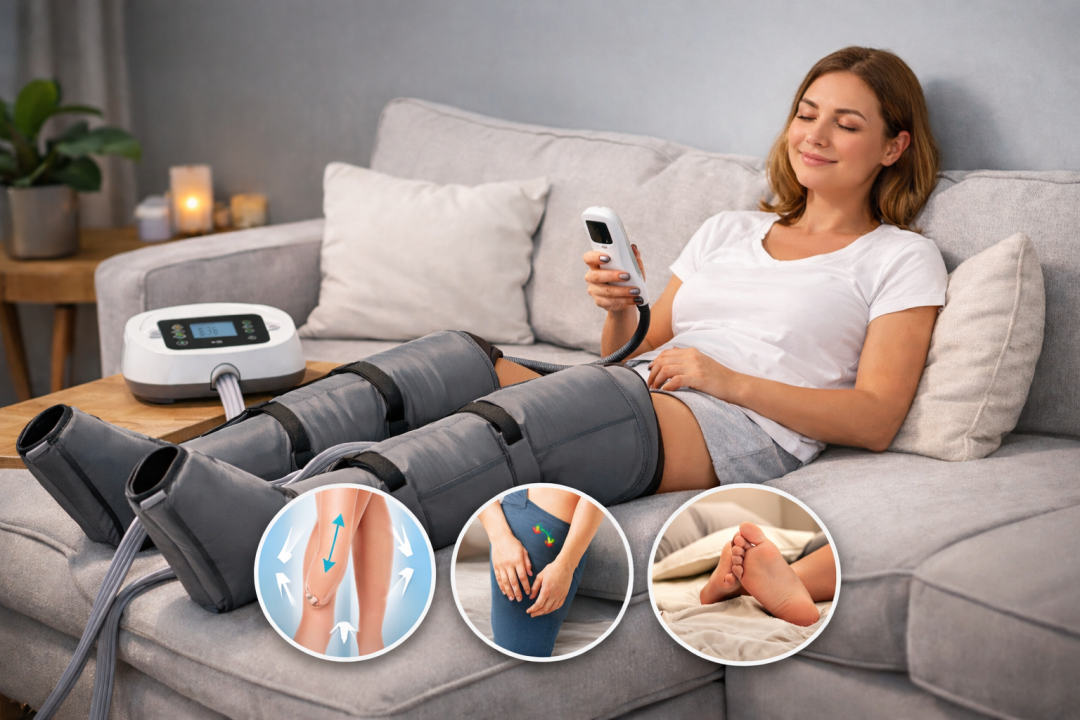
What Are Air Compression Recovery Boots? Air compression recovery boots are wearable devices that wrap around the legs and apply rhythmic air pressure in a sequential pattern—typically from the feet upward toward the calves and thighs. This cyclical inflation and deflation mimics the body’s natural “muscle pump,” helping move blood and lymphatic fluid toward the heart, potentially enhancing circulation and reducing fluid buildup. Unlike stationary massage tools or passive rest, these boots offer active mechanical assistance to circulation without requiring physical effort from the user. How They Work: The Physiology Behind Compression After intense exercise or long periods of inactivity (like travel or prolonged standing), blood can pool in the lower limbs and metabolic waste products may accumulate in muscles. Sequential compression supports the body’s venous return mechanism, driving:- Enhanced blood flow to and from muscles
- Improved lymphatic drainage
- Reduced fluid retention and swelling
What Research Shows: Evidence and Limitations Scientific studies on IPC devices and recovery boots show a mixed but informative picture. Some research supports physiological effects that align with claimed benefits, while other trials indicate more modest outcomes. Enhanced Blood Flow One controlled study found that intermittent pneumatic compression applied to the lower leg significantly increased arterial blood flow during recovery from exercise. This supports the idea that compression can augment the skeletal muscle pump and help circulation after exertion. This aligns with broader research showing that pneumatic compression can increase blood flow and venous return, which is foundational to the theory behind recovery boots. Effects on Muscle Soreness Some studies suggest intermittent pneumatic compression may reduce delayed onset muscle soreness (DOMS)—the discomfort felt 24–72 hours after intense exercise. For example, a randomized controlled trial found that participants treated with IPC after plyometric exercise showed significantly improved muscle soreness and performance indicators compared with controls at 48–72 hours. However, not all research shows clear benefits. A review of IPC use after exercise found no definitive superiority of compression boots over other recovery methods, indicating that the evidence base is still developing. Overall Recovery Effects A systematic review and meta-analysis of lower-limb intermittent pneumatic compression studies reported trivial to moderate benefits for perceived muscle soreness and some markers of muscle function, though effects on physiological markers (like muscle damage enzymes) were variable. Another randomized trial found no significant advantage of IPC over a placebo sham in some measures of DOMS recovery, suggesting effects may depend on factors like session frequency, pressure settings, and individual differences. Practical Implications: What Users Can Expect Based on current research, here’s a realistic guide to what air compression recovery boots may and may not offer: Potential Benefits
- Improved circulation and venous return, which may enhance nutrient delivery and metabolic waste removal.
- Reduced subjective muscle soreness, particularly 1–3 days after intense activity.
- Comfort and relaxation, which can support recovery routines even when measurable effects are modest.
- Effects are not universally strong across all studies, and benefits may be mild to moderate rather than dramatic.
- Some clinical evidence finds no significant advantage compared with placebo or other recovery methods unless protocols are optimized.
- Boots are best used as part of a holistic recovery strategy rather than a standalone solution.
- Hydration and balanced nutrition
- Active recovery (light movement, stretching)
- Adequate sleep and rest
- Ice baths or contrast therapy (when appropriate)